"Crowfunding per restaurare i libri della Certosa di Padula
Il progetto vede la nascita di una simbiosi importante tra Confindustria Salerno, rappresentata dal presidente Mauro Maccauro, e la Soprintendenza BAP di Salerno e Avellino, guidata da Gennaro Miccio.
Diana Della Mura18 Giugno 2014
Al via la raccolta fondi sulla piattaforma Derev per il restauro di cinque libri della Certosa di Padula." continua a leggere ... Crowfunding restauro libri Certosa di Padula:
'via Blog this'
giovedì, giugno 19, 2014


giovedì, giugno 05, 2014
Ligatus Summer School 2014 | Ligatus Summer School
"Ligatus Summer School 2014 .
22 – 26 September: The History of European Bookbinding 1450-1830.
29 September – 3 October: Identifying and recording bookbinding structures of the Eastern Mediterranean.
6 – 10 October: Byzantine bookbinding: a practical workshop.
This year’s Ligatus Summer School will take place in the beautiful city of Ljubljana in Slovenia, and will be hosted by the Archives of the Republic of Slovenia.
The price is £300 per week per participant, and this includes fees for teaching only. Travel, food and accommodation would need to be arranged individually by each student."Apply online by clicking hereLigatus Summer School 2014 | Ligatus Summer School:
'via Blog this'
22 – 26 September: The History of European Bookbinding 1450-1830.
29 September – 3 October: Identifying and recording bookbinding structures of the Eastern Mediterranean.
6 – 10 October: Byzantine bookbinding: a practical workshop.
This year’s Ligatus Summer School will take place in the beautiful city of Ljubljana in Slovenia, and will be hosted by the Archives of the Republic of Slovenia.
The price is £300 per week per participant, and this includes fees for teaching only. Travel, food and accommodation would need to be arranged individually by each student."Apply online by clicking hereLigatus Summer School 2014 | Ligatus Summer School:
'via Blog this'
martedì, maggio 27, 2014
Severe Flood Closed Five Libraries in ex-Yugoslavia
Панчевачко читалиште - Severe Flood Closed Five Libraries in ex-Yugoslavia: "
Severe Flood Closed Five Libraries in ex-Yugoslavia
Many cities in Serbia, Bosnia and Croatia have suffered major damage in heavy floods these days. When it comes to libraries, book funds and equipment were destroyed in Doboj, Čelinac and Šamac (Republic of Srpska, BIH), Maglaj (Federation of Bosnia and Herzegovina, BIH) and Obrenovac (Serbia).
'via Blog this'
Severe Flood Closed Five Libraries in ex-Yugoslavia
Many cities in Serbia, Bosnia and Croatia have suffered major damage in heavy floods these days. When it comes to libraries, book funds and equipment were destroyed in Doboj, Čelinac and Šamac (Republic of Srpska, BIH), Maglaj (Federation of Bosnia and Herzegovina, BIH) and Obrenovac (Serbia).
'via Blog this'
sabato, maggio 24, 2014
The book rustlers of Timbuktu: how Mali's ancient manuscripts were saved | World news | The Guardian
"The book rustlers of Timbuktu: how Mali's ancient manuscripts were saved
When Mali's historic city was taken by rebels, thousands of priceless ancient manuscripts came under threat. We report on a dangerous operation to smuggle the archive to safety"
read more: The book rustlers of Timbuktu: how Mali's ancient manuscripts were saved | World news | The Guardian:
'via Blog this'
When Mali's historic city was taken by rebels, thousands of priceless ancient manuscripts came under threat. We report on a dangerous operation to smuggle the archive to safety"
read more: The book rustlers of Timbuktu: how Mali's ancient manuscripts were saved | World news | The Guardian:
'via Blog this'
venerdì, maggio 23, 2014

What Causes "Old Book Smell"? | Mental Floss
"What Causes "Old Book Smell"?
11.7K Share
Matt Soniak
filed under: Big Questions, books, science
“A combination of grassy notes with a tang of acids and a hint of vanilla over an underlying mustiness” is how an international team of chemists describes the unique odor of old books in a study. read more...What Causes "Old Book Smell"? | Mental Floss:
11.7K Share
Matt Soniak
filed under: Big Questions, books, science
“A combination of grassy notes with a tang of acids and a hint of vanilla over an underlying mustiness” is how an international team of chemists describes the unique odor of old books in a study. read more...What Causes "Old Book Smell"? | Mental Floss:
giovedì, maggio 22, 2014
FRANCESCHINI APPROVA LE LINEE GUIDA PER CONSEGUIMENTO QUALIFICHE RESTAURATORE E COLLABORATORE RESTAURATORE
FRANCESCHINI APPROVA LE LINEE GUIDA PER CONSEGUIMENTO QUALIFICHE RESTAURATORE E COLLABORATORE RESTAURATORE:
FRANCESCHINI APPROVA LE LINEE GUIDA PER CONSEGUIMENTO QUALIFICHE RESTAURATORE E COLLABORATORE RESTAURATORE

'via Blog this'
FRANCESCHINI APPROVA LE LINEE GUIDA PER CONSEGUIMENTO QUALIFICHE RESTAURATORE E COLLABORATORE RESTAURATORE
Pubblicato il 21 maggio 2014
FranceschiniBanner
Il Ministro dei beni e delle attività culturali e del turismo, Dario Franceschini, ha approvato le linee guida applicative dell’articolo 182 del Codice dei Beni Culturali e del Paesaggio riguardante la disciplina transitoria per il conseguimento delle qualifiche di restauratore e di collaboratore restauratore di beni culturali.
L’articolo 182 del Codice prevede che, in attesa dell’attivazione di specifici corsi universitari, la qualifica di restauratore e di collaboratore restauratore di beni culturali si acquisisca mediante un’apposita procedura di selezione pubblica, da concludersi entro il 30 giugno 2015. Le linee guida, adottate come previsto sentite le organizzazioni imprenditoriali e sindacali più rappresentative, costituiscono l’indirizzo interpretativo per la valutazione dei requisiti in possesso degli operatori interessati. In particolare: dei titoli di studio, delle attività di restauro svolte e delle competenze autocertificate. Le linee guida saranno consultabili sul sito www.beniculturali.it non appena vagliate dagli organi di controllo. Il bando per l’apertura dei procedimenti telematici sarà anch’esso pubblicato nei prossimi mesi.
Roma, 20 maggio 2014
Ufficio Stampa MiBACT
Tel. 06.67232261
martedì, maggio 20, 2014
The Fix: Binding Waste – Smithsonian Libraries Blog
Notate un post solo sul riciclo delle carte scritte nelle indorsature, quando ne potremo scrivere uno in Italila senza apparire ridicoli ?
"THE FIX: BINDING WASTE
BY ERIN RUSHING« PREVIOUS
This post was written by Vanessa Haight Smith, head of Preservation Services.
When repairing older books, the Smithsonian Libraries conservators occasionally uncover evidence of recycling by the original bookbinders. Paper from damaged and discarded volumes was frequently used when binding new books. Why use a new, clean sheet of paper when a leftover scrap would work just as well?
With the development of moveable type in the mid fifteenth century, numerous manuscripts were replaced with printed copies and eventually, the discarded parchment became useful material for new bookbindings. While the use of binding waste has varied throughout the centuries (having been used on all parts of books from covering material to paper repair) we most frequently see it used to line spines."read more: The Fix: Binding Waste – Smithsonian Libraries Blog:
'via Blog this'
"THE FIX: BINDING WASTE
BY ERIN RUSHING« PREVIOUS
This post was written by Vanessa Haight Smith, head of Preservation Services.
When repairing older books, the Smithsonian Libraries conservators occasionally uncover evidence of recycling by the original bookbinders. Paper from damaged and discarded volumes was frequently used when binding new books. Why use a new, clean sheet of paper when a leftover scrap would work just as well?
With the development of moveable type in the mid fifteenth century, numerous manuscripts were replaced with printed copies and eventually, the discarded parchment became useful material for new bookbindings. While the use of binding waste has varied throughout the centuries (having been used on all parts of books from covering material to paper repair) we most frequently see it used to line spines."read more: The Fix: Binding Waste – Smithsonian Libraries Blog:
'via Blog this'
domenica, maggio 18, 2014
Extra Extra Large Art: — NEDCC CONSERVATION TREATMENT OF THE GARIBALDI PANORAMA
"CONSERVATION TREATMENT OF THE GARIBALDI PANORAMA
Large objects are not usually a challenge for the Northeast Document Conservation Center’s conservation lab. The Center’s facility is equipped with specialized sinks and work tables that accommodate even very large objects, such as wall maps, posters, wallpaper, architectural drawings, works of art on paper, and other oversize materials.
NEDCC’s paper conservators recently worked on a project that could be classified as EXTRA EXTRA large. The Garibaldi Panorama is among the longest paintings in the world, measuring 260 feet long and 4½ feet high. From the Anne S.K. Brown Military Collection at the John Hay Library of Brown University, the two-sided work of art on paper depicts the life story of Italian patriot Giuseppe Garibaldi, who played a major role in the unification of Italy.
read more: Extra Extra Large Art: — NEDCC:
Large objects are not usually a challenge for the Northeast Document Conservation Center’s conservation lab. The Center’s facility is equipped with specialized sinks and work tables that accommodate even very large objects, such as wall maps, posters, wallpaper, architectural drawings, works of art on paper, and other oversize materials.
NEDCC’s paper conservators recently worked on a project that could be classified as EXTRA EXTRA large. The Garibaldi Panorama is among the longest paintings in the world, measuring 260 feet long and 4½ feet high. From the Anne S.K. Brown Military Collection at the John Hay Library of Brown University, the two-sided work of art on paper depicts the life story of Italian patriot Giuseppe Garibaldi, who played a major role in the unification of Italy.
read more: Extra Extra Large Art: — NEDCC:
sabato, maggio 17, 2014
vincitori del bando "L’mpiego dell’Hanji, la carta coreana.
vincitori del bando "L’mpiego dell’Hanji, la carta coreana. Workshop sulla conservazione della carta http://ita-milano.mofa.go.kr/worldlanguage/europe/ita-milano/mission/news/index.jsp
Di seguito riportiamo in ordine alfabetico la lista dei vincitori del bando “L’mpiego dell’Hanji, la carta coreana. Workshop sulla conservazione della carta” -
ABATE Eleonora - BARZAGHI Laura - CATTANEO Barbara - DELIA Federica - DIAZ GONZALEZ Elisa - ORTEGA BOLDO Sara - PETRELLA Gaia - PIGNATTI MORANO Gianlorenzo - RUELLO Stefania - ZORZELLA Lucia I vincitori verranno contattati individualmente nei prossimi giorni. Ringraziamo anche i numerosi partecipanti esclusi, invitandoli a presentare domanda per le prossime attività che organizzeremo. Controllate periodicamente il sito del Consolato per essere informati.
martedì, maggio 13, 2014
Meet Our Adopt a Book Conservators - Collection Care blog
Meet Our Adopt a Book Conservators - Collection Care blog
- See more at: http://britishlibrary.typepad.co.uk/collectioncare/2014/05/meet-our-adopt-a-book-conservators.html#sthash.NyNNnZOG.dpuf
Meet Our Adopt a Book Conservators
By adopting books at the British Library, donors have helped directly support the work of our conservators for over 25 years. We are very pleased to introduce our Adopt a Book conservators and tell you a little more about what they do in a new series of blog posts.
Kim Mulder, our new Adopt a Book conservator, is neither new to the British Library, nor new to conservation. She has already worked in the British Library conservation studio for 1.5 years on fixed term contracts and has extensive conservation experience. She previously worked in a number of institutions including Stedelijk Museum Amsterdam, Museum Boijmans-van Beuningen in Rotterdam, and The Netherlands Cultural Heritage Agency.
Kim has contributed significantly to several strands of our conservation programme including treatment on core collection items and running repairs. She has done extensive work on our War Office maps and also supports the Library’s major project to digitise some 60,000 maps and views in King George III’s personal collection by assessing their condition and managing any conservation treatment required.
Kim’s particular interest is in large paper objects. She says: “I like working on large format items because they come with their own set of challenges and parameters. I find them fulfilling to work on, but my training and experience allows me to work on a broad spectrum of objects.”
giovedì, maggio 08, 2014
Adapt and Evolve : Conference 2015 | Icon Book and Paper Group
Adapt & evolve : East Asian materials and techniques in Western conservation
CONFERENCE
from 08 April 2015 to 10 April 2015
Organized by:
Icon Book & Paper Group, United Kingdom
Icon Book & Paper Group, United Kingdom
Location of event: London, United Kingdom
More info: http://icon.org.uk/index.php?option=com_content&view=article&id=2297%3Abapg-news&catid=9%3Abook-a-paper-group&Itemid=16
Description :
This conference aims to explore the introduction, formalisation and evolution of East Asian materials and techniques that have become part of paper conservation practice across the globe. During the conference, speakers and delegates will look into how these practices, materials and techniques have been adapted and developed within the conservation of Western book and paper collections. The conference will draw together key speakers from across the international conservation community, providing delegates with a fresh view of current research into materials and techniques borrowed from Japan, China, Taiwan and Korea. The conference will provide opportunities for delegates to take part in practical workshops and will feature a wide variety of trade stalls, including papermakers from East Asia. The two-day conference will be proceeded by a day of studio visits where delegates will have an opportunity for to book into pre-arranged tours of conservation studios in London.
This conference aims to explore the introduction, formalisation and evolution of East Asian materials and techniques that have become part of paper conservation practice across the globe. During the conference, speakers and delegates will look into how these practices, materials and techniques have been adapted and developed within the conservation of Western book and paper collections. The conference will draw together key speakers from across the international conservation community, providing delegates with a fresh view of current research into materials and techniques borrowed from Japan, China, Taiwan and Korea. The conference will provide opportunities for delegates to take part in practical workshops and will feature a wide variety of trade stalls, including papermakers from East Asia. The two-day conference will be proceeded by a day of studio visits where delegates will have an opportunity for to book into pre-arranged tours of conservation studios in London.
Registration for the conference will open in August 2014
Call for papers to be published April 2014
Home | Ligatus Summer School
Home | Ligatus Summer School: "Ligatus Summer School 2014
22 – 26 September: The History of European Bookbinding 1450-1830.
29 September – 3 October: Identifying and recording bookbinding structures of the Eastern Mediterranean.
6 – 10 October: Byzantine bookbinding: a practical workshop.
This year’s Ligatus Summer School will take place in the beautiful city of Ljubljana in Slovenia, and will be hosted by the Archives of the Republic of Slovenia."
'via Blog this'
22 – 26 September: The History of European Bookbinding 1450-1830.
29 September – 3 October: Identifying and recording bookbinding structures of the Eastern Mediterranean.
6 – 10 October: Byzantine bookbinding: a practical workshop.
This year’s Ligatus Summer School will take place in the beautiful city of Ljubljana in Slovenia, and will be hosted by the Archives of the Republic of Slovenia."
'via Blog this'
mercoledì, maggio 07, 2014
Associate Conservator for Paper & Book Materials the Walters Art Museum
About the Walters Art Museum: "Associate Conservator for Paper & Book Materials"
Associate Conservator for Paper & Book Materials
Job Location : Conservation
The Walters Art Museum is offering an exciting opportunity to an energetic and professional conservator to work in a very active museum laboratory that focuses on preventive collections care, treatment, research and public outreach.
The Walters is a dynamic museum with collections from around the world including a legendary collection of illuminated medieval manuscripts that is a major national treasure of the United States. The Conservation and Technical Research Division staff members work collaboratively across all divisions of the museum and are committed to professional activities both nationally and internationally.
'via Blog this'
giovedì, maggio 01, 2014
Disaster Response and Recovery
Disaster Response and Recovery: "Disaster Response & Recovery
AIC's disaster response and recovery efforts encompass facilitating the American Institute for Conservation - Collections Emergency Response Team (AIC-CERT) training; working through FAIC with the Smithsonian Institution and the U.S. Committee of the Blue Shield to help recover cultural and historic artifacts damaged by the 2010 earthquakes in Haiti; assisting in the Northeast after Hurricane Sandy in late 2012; assembling guides and information; as well as partnering with other organizations and their disaster response and recovery efforts.
AIC-CERT
AIC-CERT (The American Institute for Conservation - Collections Emergency Response Team) responds to the needs of cultural institutions during emergencies and disasters through coordinated efforts with first responders, state agencies, vendors and the public. For 24-hour assistance from trained volunteers, call (202) 661-8068.
View more
"
'via Blog this'
AIC's disaster response and recovery efforts encompass facilitating the American Institute for Conservation - Collections Emergency Response Team (AIC-CERT) training; working through FAIC with the Smithsonian Institution and the U.S. Committee of the Blue Shield to help recover cultural and historic artifacts damaged by the 2010 earthquakes in Haiti; assisting in the Northeast after Hurricane Sandy in late 2012; assembling guides and information; as well as partnering with other organizations and their disaster response and recovery efforts.
AIC-CERT
AIC-CERT (The American Institute for Conservation - Collections Emergency Response Team) responds to the needs of cultural institutions during emergencies and disasters through coordinated efforts with first responders, state agencies, vendors and the public. For 24-hour assistance from trained volunteers, call (202) 661-8068.
View more
"
'via Blog this'
Jobs (Getty Trust)
Jobs (Getty Trust): "Jobs
"
"
The Getty Conservation Institute (GCI) Science department (http://www.getty.edu/conservation/about/science/index.html) is seeking an individual with a background in Materials Science and Engineering to fill the position of Scientist, which is a five-year, limited-term position.
The Scientist will join the research team for the Managing Collection Environments Initiative, which was launched at the end of 2013 (http://www.getty.edu/conservation/our_projects/education/managing/index.html). The Initiative focuses on the research and development of sustainable environmental control and management strategies for collections in museums, libraries, archives, and other repositories. The initiative will have several complementary activities—including, field testing, education, and information dissemination—in an initial program of work that spans five years.
'via Blog this'
mercoledì, aprile 30, 2014
Collections Care Supervising Conservator
Collections Care Supervising Conservator
'via Blog this'
New York Public Library, United States
Job location: Long Island City, NY, USA
More info: URL
Description
Overview:
Overview:
Within the New York Public Library’s Barbara Goldsmith Preservation Division, the Collections Care unit is responsible for treatment, repair, and stabilization of general collections in various formats; creation of protective enclosures and housings; deacidification; collection surveys; integrated pest management; emergency preparedness and response, including mold remediation; and promotion of preservation policies and standards. The unit is batch production oriented, and provides a high volume of quality deliverables. The program’s development and outreach activities align with the Preservation Division’s efforts to safeguard the Library’s collections and support the Library’s strategic priorities for widespread and ongoing physical and digital access. Continue reading…
'via Blog this'
The purple Codex Rossanensis: spectroscopic characterization and first evidence of the use of the elderberry lake in a 6th century manuscript
I pre-print dell'intervento di ieri alla'Accademia dei Lincei di Marina Bicchieri sono già disponibili on line sul sito della Cornell University.
[1404.6414] The purple Codex Rossanensis: spectroscopic characterization and first evidence of the use of the elderberry lake in a 6th century manuscript: "The purple Codex Rossanensis: spectroscopic characterization and first evidence of the use of the elderberry lake in a 6th century manuscript
Marina Bicchieri
(Submitted on 25 Apr 2014)
The Codex Rossanensis is a 6th century Bizantine illuminated manuscript written on purple parchment and conserved at the Museo Diocesano in Rossano Calabro, Italy. It is one of the oldest surviving illuminated manuscripts of the New Testament. The challenge of the analysis of the Codex Rossanensis lies in the lack of analytical information on the pictorial media used in the Early Middle Ages. Even though old-medieval illuminated manuscripts have been deeply studied from the historical standpoint, they have been rarely described in their material composition. This paper presents the results obtained during the measurements campaign (June 2012 - November 2013). The spectroscopic analyses performed by Raman, micro-FTIR and XRF allowed for the complete characterization of the pictorial palette, the inks, the support and the material used in a previous restoration treatment. To the author knowledge the article shows the first experimental evidence of the usage of the elderberry lake in a 6th century illuminated manuscript."
'via Blog this'
[1404.6414] The purple Codex Rossanensis: spectroscopic characterization and first evidence of the use of the elderberry lake in a 6th century manuscript: "The purple Codex Rossanensis: spectroscopic characterization and first evidence of the use of the elderberry lake in a 6th century manuscript
Marina Bicchieri
(Submitted on 25 Apr 2014)
The Codex Rossanensis is a 6th century Bizantine illuminated manuscript written on purple parchment and conserved at the Museo Diocesano in Rossano Calabro, Italy. It is one of the oldest surviving illuminated manuscripts of the New Testament. The challenge of the analysis of the Codex Rossanensis lies in the lack of analytical information on the pictorial media used in the Early Middle Ages. Even though old-medieval illuminated manuscripts have been deeply studied from the historical standpoint, they have been rarely described in their material composition. This paper presents the results obtained during the measurements campaign (June 2012 - November 2013). The spectroscopic analyses performed by Raman, micro-FTIR and XRF allowed for the complete characterization of the pictorial palette, the inks, the support and the material used in a previous restoration treatment. To the author knowledge the article shows the first experimental evidence of the usage of the elderberry lake in a 6th century illuminated manuscript."
'via Blog this'
giovedì, aprile 24, 2014
The San Gemini Conservation and History of Book Structures Course – a teacher’s view by Flavio Marzo | International Institute for Conservation of Historic and Artistic Works
The San Gemini Conservation and History of Book Structures Course – a teacher’s view by Flavio Marzo | International Institute for Conservation of Historic and Artistic Works:
 'via Blog this'
The San Gemini Conservation and History of Book Structures Course – a teacher’s view by Flavio Marzo
Submitted by Barbara Borghese on 17 Apr 2014
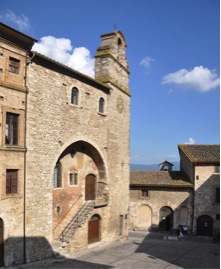
San Gemini Preservation Studies is a summer field school that organises lectures, research, fieldwork, workshops and fieldtrips in the disciplines of historic preservation, restoration and conservation. It is located in central Italy, in the city of San Gemini in Umbria. Flavio Marzo, tutor of one of the courses, talks about his teaching experience
The programme is the result of the collaboration between scholars from various international universities, institutions and local preservation groups, fostering a multidisciplinary approach to historic preservation. All the academic activities are run in English.
In 2013, a new course on the history of book structures and their conservation was added to the curriculum in order to complement the one already existing focusing on the conservation of art on paper.
I was the tutor of the course - I am a book conservation manager at the British Library and have been working in London since 2005 having moved from Italy where I graduated in book and paper conservation.
I have been teaching book conservation and running workshops since 2006, and in 2011 I was approached by Max Cardillo, Director of the San Gemini Preservation Studies Programme, who offered me the opportunity to start a new course on history of book structures and their conservation/restoration.
It was obviously an extremely interesting and flattering offer but also a very challenging one. Teaching is complex, especially without a ‘proper’ academic background; teaching conservation is even more complicated because you have to be able to create a successful and appropriate balance between theory and practical exercises most of all make it reach a professional standard.
In 2013, a new course on the history of book structures and their conservation was added to the curriculum in order to complement the one already existing focusing on the conservation of art on paper.
I was the tutor of the course - I am a book conservation manager at the British Library and have been working in London since 2005 having moved from Italy where I graduated in book and paper conservation.
I have been teaching book conservation and running workshops since 2006, and in 2011 I was approached by Max Cardillo, Director of the San Gemini Preservation Studies Programme, who offered me the opportunity to start a new course on history of book structures and their conservation/restoration.
It was obviously an extremely interesting and flattering offer but also a very challenging one. Teaching is complex, especially without a ‘proper’ academic background; teaching conservation is even more complicated because you have to be able to create a successful and appropriate balance between theory and practical exercises most of all make it reach a professional standard.
My past teaching experiences focussed on organising short workshops customised for professionals interested in practising specific historical bookbinding techniques; the course I was asked to prepare for the San Gemini School was a month-long introduction to the conservation and history of book structures, a very different proposition altogether!
The first year being now over, I can say that, after receiving feedback from my students that the challenge was quite successfully overtaken.
The aim of the course is to offer people from different backgrounds an exhaustive overview of what book conservation and book history.
One month can be a very short time when you’re trying to condense information that could easily fill a three year course with, so what I decided to do was to collect as much material as possible from my past professional experiences and to organise it in a way that was meaningful to and understandable by students with different level of expertise and backgrounds.
I believe that a good balance between theory and practice is essential if you want to gain a real understanding of book structures. The physicality of books is still perceived as a secondary feature; for many institutions it is not yet a priority to provide training on conservation and preservation issues.
Therefore I organised the classes in the mornings of presentations about the history of the book and the theory of restoration/conservation and afternoons of practical workshops.
Morning theoretical sessions were supported by video and audio material specifically prepared for the course
Luckily in 20 my year’s career I have been able to collect a vast amount of material and documentation comprising of interesting case studies from the various collections I have been working on (Italy, UK, Greece, and Egypt). This has been the source from where I collected and organised the material that I have decided to share with my students. There is a lot that can be taught from literature but many of the things I talk about come from my personal working experience.
The course has been structured to cover the history of the codex from its appearance in the western world up to modern times. The majority of the material used has western roots but I also included material on eastern and Islamic traditions.
The first weeks were spent mostly on the history of western book structures and the production of facsimiles of historical sewing structures.
The use of different materials and techniques and their impact on the final result were examined and discussed along the way, including the making of dummies and the comparison with known available literature sources.
The first year being now over, I can say that, after receiving feedback from my students that the challenge was quite successfully overtaken.
The aim of the course is to offer people from different backgrounds an exhaustive overview of what book conservation and book history.
One month can be a very short time when you’re trying to condense information that could easily fill a three year course with, so what I decided to do was to collect as much material as possible from my past professional experiences and to organise it in a way that was meaningful to and understandable by students with different level of expertise and backgrounds.
I believe that a good balance between theory and practice is essential if you want to gain a real understanding of book structures. The physicality of books is still perceived as a secondary feature; for many institutions it is not yet a priority to provide training on conservation and preservation issues.
Therefore I organised the classes in the mornings of presentations about the history of the book and the theory of restoration/conservation and afternoons of practical workshops.
Morning theoretical sessions were supported by video and audio material specifically prepared for the course
Luckily in 20 my year’s career I have been able to collect a vast amount of material and documentation comprising of interesting case studies from the various collections I have been working on (Italy, UK, Greece, and Egypt). This has been the source from where I collected and organised the material that I have decided to share with my students. There is a lot that can be taught from literature but many of the things I talk about come from my personal working experience.
The course has been structured to cover the history of the codex from its appearance in the western world up to modern times. The majority of the material used has western roots but I also included material on eastern and Islamic traditions.
The first weeks were spent mostly on the history of western book structures and the production of facsimiles of historical sewing structures.
The use of different materials and techniques and their impact on the final result were examined and discussed along the way, including the making of dummies and the comparison with known available literature sources.
In this first year we were able to create four different facsimiles of historical sewing structures up to their full coverings and decoration.
It was a real challenge and I have to admit that I was pleasantly surprised by the amazing commitment of my students and the quality of the final results. On top of the practical sessions that included the making of the
It was a real challenge and I have to admit that I was pleasantly surprised by the amazing commitment of my students and the quality of the final results. On top of the practical sessions that included the making of the
facsimiles, the course gave us the opportunity to work in the local historical archive, where an absolutely amazing historical collection of manuscripts and printed books is kept and preserved.
Working on originals consisted of preparing detailed condition and structural assessments of some of the most interesting pieces housed in the archive. Those items were analysed and possible conservation treatments proposals were drawn up.
This exercise proved extremely useful because it gave the students the opportunity to work along with professional conservators while also providing the chance to observe and study original material and their physical features, practiced previously on the facsimiles (some of the manuscripts in the collection date back to the XIV century).
After the assessment different kind of protective enclosures for library and archive material were created by the students, some to be kept with their own facsimiles and other, prepared with archival material, to be used for the housing of the original manuscripts previously analysed.
Along with the visits to the local archive, all the different aspects of preventive and non-invasive conservation techniques were presented to the students through presentations and discussions. Environmental control practices, minimal and in-situ interventive techniques, re-housing solutions and pest control monitoring exercises were described and discussed with the students during the morning sessions.
Preventive conservation trainings, focussing on handling techniques, together with the theory of workflows optimisation in libraries, were also topics covered during the last two weeks.
An on-going digitisation project involving the local archive collection has also provided the opportunity for the students to develop and apply some tools on how to mitigate possible risks associated with digitisation processes.
Together with my own month-long contribution to the course, other colleagues from British and Italian institutions were brought in to share their experiences and to teach specific topics like parchment conservation and box-making techniques.
At the end of the month, a visit to the Vatican Library conservation studio was organised. This trip gave the students the opportunity to speak to other book conservators in their working environment and to visit a fully equipped professional book, paper and parchment conservation studio.
Working on originals consisted of preparing detailed condition and structural assessments of some of the most interesting pieces housed in the archive. Those items were analysed and possible conservation treatments proposals were drawn up.
This exercise proved extremely useful because it gave the students the opportunity to work along with professional conservators while also providing the chance to observe and study original material and their physical features, practiced previously on the facsimiles (some of the manuscripts in the collection date back to the XIV century).
After the assessment different kind of protective enclosures for library and archive material were created by the students, some to be kept with their own facsimiles and other, prepared with archival material, to be used for the housing of the original manuscripts previously analysed.
Along with the visits to the local archive, all the different aspects of preventive and non-invasive conservation techniques were presented to the students through presentations and discussions. Environmental control practices, minimal and in-situ interventive techniques, re-housing solutions and pest control monitoring exercises were described and discussed with the students during the morning sessions.
Preventive conservation trainings, focussing on handling techniques, together with the theory of workflows optimisation in libraries, were also topics covered during the last two weeks.
An on-going digitisation project involving the local archive collection has also provided the opportunity for the students to develop and apply some tools on how to mitigate possible risks associated with digitisation processes.
Together with my own month-long contribution to the course, other colleagues from British and Italian institutions were brought in to share their experiences and to teach specific topics like parchment conservation and box-making techniques.
At the end of the month, a visit to the Vatican Library conservation studio was organised. This trip gave the students the opportunity to speak to other book conservators in their working environment and to visit a fully equipped professional book, paper and parchment conservation studio.
I am obviously very happy about my experience but I am even more satisfied as a result of the feedback I received from my students.
The heterogeneous background of the students from emerging professionals to seasoned practitioners created an atmosphere filled with very different expectations.
Regardless of backgrounds and expectations, everyone was able to gain a new perspective on library and archival material and gained new knowledge that was relevant for their own specific needs.
Some of the students will decide to join the conservation profession, other will use what they have learned to care for the collections they are responsible for, and some will simply add a new skill to their academic curricula.
However the aim of the course was not to form fully trained book conservators but simply to change the perception of books and their physicality and give an understanding of what it’s involved in caring for them. I hope and believe that we achieved that aim.
The heterogeneous background of the students from emerging professionals to seasoned practitioners created an atmosphere filled with very different expectations.
Regardless of backgrounds and expectations, everyone was able to gain a new perspective on library and archival material and gained new knowledge that was relevant for their own specific needs.
Some of the students will decide to join the conservation profession, other will use what they have learned to care for the collections they are responsible for, and some will simply add a new skill to their academic curricula.
However the aim of the course was not to form fully trained book conservators but simply to change the perception of books and their physicality and give an understanding of what it’s involved in caring for them. I hope and believe that we achieved that aim.
For more information about the courses and how to book for future sessions go tohttp://sangeministudies.info
All images used in this article are courtesy of Flavio Marzo, all rights reserved
venerdì, aprile 18, 2014
L’IMPIEGO DELL’HANJI, LA CARTA DI GELSO COREANA WORKSHOP SULLA CONSERVAZIONE DELLA CARTA Biblioteca Trivulziana e Laboratorio di Restauro Castello Sforzesco, Milano 5-6 giugno 2014
L’IMPIEGO DELL’HANJI, LA CARTA DI GELSO COREANA
WORKSHOP SULLA CONSERVAZIONE DELLA CARTA
Biblioteca Trivulziana e Laboratorio di Restauro
Castello Sforzesco, Milano
5-6 giugno 2014
Bando per la presentazione di candidature alla borsa di studio per restauratori di carta con una media esperienza (almeno 5 anni)
In occasione del 130° anniversario dei rapporti diplomatici tra Corea e Italia, il Consolato Generale della Repubblica di Corea (Corea del Sud) e la Biblioteca Trivulziana del Castello Sforzesco di Milano sono lieti di supportare la partecipazione di restauratori di media esperienza al progetto “L’impiego dell’Hanji, la carta di gelso coreana, nel workshop sulla conservazione della carta”
Luogo del workshop:
Il Workshop si terrà presso il Laboratorio di Restauro della Biblioteca Trivulziana, Castello Sforzesco a Milano. La partecipazione è consentita ai 10 restauratori che verranno selezionati dal Comitato organizzativo del workshop.
Scadenza per l’invio delle domande
Il termine ultimo di presentazione delle iscrizioni è il 12 maggio 2014. Tutte le domande devono essere presentate elettronicamente (via email) entro le ore 17.00(CET) di lunedì, 12 maggio 2014. I documenti devono essere presentati in formato in PDF o Microsoft Word secondo le seguenti istruzioni:
nell’oggetto della mail dovrà essere indicato “L’impiego dell’Hanji, la carta di gelso coreana workshop sulla conservazione della carta – Inserire il PROPRIO NOME”. Le domande dovranno essere inviate amilano@mofa.go.kr
Criteri per l’invio delle domande
Le domande per le borse di studio dovranno includere i seguenti documenti:
- Una lettera motivazionale indirizzata al Comitato (una pagina)
- CurriculumVitae redatto secondo il Formato europeo (http://europass.cedefop.europa.eu/en/documents/curriculum-vitae/templates-instructions)
Le domande dovranno essere inviate entro il 12 maggio all’indirizzo e-mail: milano@mofa.go.kr
Obiettivo delle borse di studio e idea del workshop:
Le borse di studio intendono supportare i restauratori di libri e opere su carta, italiani e stranieri di media esperienza (almeno 5 anni), che parteciperanno al workshop. Questo workshop di due giorni offre una compensione teorica e pratica della storia della carta di gelso dell’Asia nordorientale, riservando una particolare attenzione alla carta coreana Hanji e al suo utilizzo nella attuale conservazione della carta occidentale.
Obiettivo del workshop:
Il workshop prevede di fornire ai restauratori gli strumenti per identificare ed apprezzare le caratteristiche della carta di gelso dell’Asia nordorientale, e per comprendere il suo grande contributo nella pratica moderna di conservazione della carta occidentale. Le carte coreane, cinesi e giapponesi sembrano avere caratteristiche simili, ma ad un'occhiata più attenta alle materie prime e ai metodi di lavorazione emergono le differenze. Ai partecipanti sarà offerta una breve panoramica sugli sviluppi principali della storia della produzione della carta nell’Asia nordorientale, unitamente ai metodi di produzione contemporanea. E’ prevista una presentazione di immagini al microscopio delle fibre di diverse carte dell’Asia nordorientale ed una spiegazione su come distinguerle e identificarle. Questa presentazione sarà seguita da uno studio di diversi campioni di carte create utilizzando varie materie prime, procedure e metodi di asciugatura. I partecipanti potranno poi imparare come applicare questa conoscenza, basata sulle ricerche attuali, nella scelta delle carte più appropriate nel trattamento di un oggetto. I partecipanti possono portare le proprie carte asiatiche utilizzate per i trattamenti di conservazione.
Il programma giorno per giorno
Giovedì 5 giugno 2014
h.09.00
Arrivo dei vincitori alla Biblioteca Trivulziana e Laboratorio di Restauro, Castello Sforzesco, Milano
Mattina:
Questa sezione teorica introdurrà ai restauratori selezionati la storia e le caratteristiche dell’arte cartaria coreana, cinese e giapponese, in aggiunta ad una panoramica sulla produzione contemporanea di carte dell’Asia nordorientale. Ai partecipanti saranno mostrati alcuni dei fattori che possono modificare la qualità della carta durante il suo processo di fabbricazione. Immagini al microscopio delle diverse fibre della carta dell’Asia nordorientale saranno presentate con set di diversi campioni di carta, in modo che i partecipanti possano studiare le carte di prima mano ed esaminare le fibre, la formazione del foglio, il contenuto alcalino e il risultato dei diversi proccessi di produzione e metodi di asciugatura.
Nella seconda sessione, i partecipanti costruiranno un pannello per l’asciugatura in stile asiatico usando un supporto a nido d’ape (Tycore), rivestito di carta di gelso coreana Hanji e collato con dispersione acrilica. Questo tipo di pannello per l’asciugatura è relativamente facile da realizzare ed è leggero e resistente. I pannelli per l’asciugatura possono essere utilizzati per asciugare oggetti quando hanno bisogno di essere essiccati distesi o quando non possono essere sottoposti a pressione. Questa tecnica è stata sviluppata partendo dall’utilizzo di un muro, o di un tavolo, o di un karibari board nella tradizione della conservazione coreana, cinese e giapponese.
Pomeriggio:
I partecipanti realizzeranno una carta di piccole dimensioni utilizzando strumenti semplici e frammenti di carta occidentale fatta a mano e Hanji. Questa pratica non solo aiuterà i partecipanti a capire le tecniche basilari di produzione della carta, ma contribuirà anche alla creazione della propria carta di risarcimento con il giusto peso e colore.
I partecipanti esamineranno diversi materiali per la colorazione della carta di gelso, come acquerelli, colori acrilici e coloranti reattivi per fibre. I partecipanti potranno realizzare campioni di carte pretonate, utilizzando materiali diversi di cui verranno discussi vantaggi e svantaggi in termini di colore, stabilità, applicabilità e convenienza.
I partecipanti studieranno come utilizzare l’Hanji per spianare le carte occidentali. Spianare alcuni oggetti realizzati con la carta occidentale è spesso difficile perché essa ha fibre corte e sono sensibili all’umidità. A differenza delle caratteristiche di tessuti non tessuti in poliestere, la carta di gelso può essere usata per facilitare le procedure di spianamento, grazie alle sue fibre lunghe e ai suoi diversi gradi di elasticità.
Dopo aver fatto asciugare l’Hanji incollata sul pannello di asciugatura, i partecipanti applicheranno una dispersione acrilica sull’intero pannello. Tale applicazione rende il pannello più resistente all’umidità e all’abrasione.
Venerdì 6 giugno 2014
h.09.00- 13.00
Laboratorio di Restauro della Biblioteca Trivulziana
Durante la mattina, i partecipanti apprenderanno alcuni dettagli per i risarcimenti e foderature utilizzando la carta tradizionale coreana Hanji. I partecipanti fodereranno un oggetto in carta occidentale con della Hanji di leggera grammatura. Apprenderanno le tecniche di asciugatura degli oggetti foderati utilizzando il pannello di asciugatura che essi avranno realizzato. I partecipanti utilizzeranno anche molteplici strati di Hanji con della gelatina per risarcire lacune alle pergamene.
Educatore ospite: Minah Song
Minah Song è un’esperta Senior della conservazione di Opere d'Arte su Carta presso il Conservation Center for Art and HistoricArtifacts (CCAHA) di Philadelphia, USA. Ha conseguito un master in Storia dell’Arte dell’Asia orientale presso l’Academy of KoreanStudies in Corea e un Master in Conservazione presso il Camberwell College of Arts di Londra, UK. Lavora su una gran varietà di opere d’arte in carta, mappe, disegni architettonici, materiale archivistico, pergamene e oggetti asiatici. Tra i suoi progetti di ricerca:
“Permanence, durability and uniqueproperties of Hanji” redatto con Jesse Munn (“AIC Book and PaperAnual”, Vol. 32, 2004: 127-136);
“Conservation of a group of Early 19th century Chinese Export Flora Paintings (presentato all’IncontroAnnualedell’AICnel 2007);
“The History and Characteristics of Korean Books and Bookbinding”- in “Journal of the Institute of Conservation”, Vol. 32, no. 1 2009:53-78);
“Can West meet East?- Different Approaches to Conservation of East Asian Art” presentato alla conferenza “East Asian Art: Historic Context & Modern preservation of paper-based Works Conference”, 2010);
“Korean paper, Hanji, its History, Techniques and Properties” presentato alla conferenza “Paper from the East Conference” di Londra, 2011);
“Handmade Asian Papers from a Conservator’s point of view” (“Guild of Books Worker’s Journal” in attesa di pubblicazione).
Pranzo
h.15.00
Bibiloteca Trivulziana (evento aperto al pubblico)
Nel pomeriggio il workshop terminerà alla Biblioteca Trivulziana presso il Castello Sforzesco con un momento di discussione libera e riflessione.
Tutti i partecipanti, unitamente alla autorità dei due Paesi, nonché al pubblico e alla stampa interessati all’evento, avranno la possibilità di vedere il Codice Trivulziano di Leonardo da Vinci, conservato presso la Biblioteca Trivulziana ed esposto qui per questa occasione speciale insieme ad una copia del JIKJI, il primo volume esistente stampato a caratteri mobili in metallo (1377), originario della Corea e conservato presso la Biblioteca Nazionale di Francia.
https://www.bncf.firenze.sbn.it/biblioteca/laboratorio-di-restauro-conservazione-libri-manoscritti/
Iscriviti a:
Post (Atom)